
Young people in Dorset want health and social care services to listen more, communicate better and coordinate their care
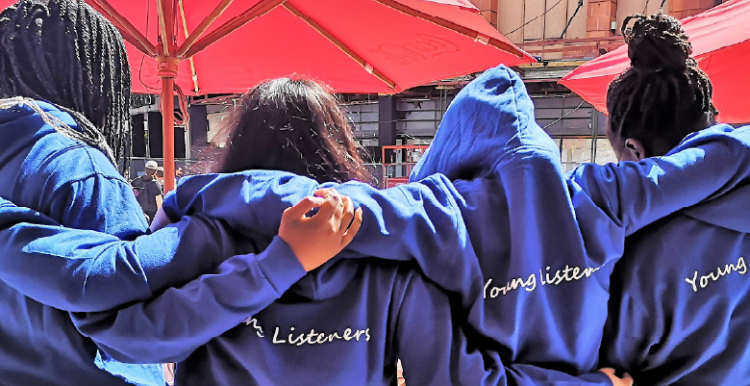
70 young people have told Healthwatch Dorset Young Listeners about their experiences of using health and social care services. They talked about the barriers and challenges they face when seeking support, and the changes they want to see to make services work better for young people.
Key issues were identified and, in response, the Young Listeners have made recommendations for how Dorset’s health and care services can develop to address young people’s needs and concerns. They have presented their findings and recommendations to Bournemouth, Christchurch and Poole (BCP) Council, Dorset Council and Children’s Services, and Dorset’s Clinical Commissioning Group.
Key themes and findings
Poor communication: 95% of young people spoken to felt that communication between services needed to be improved, and the lack of communication and coordination was felt to hinder their progress. 51% had experience of services communicating with their school, but 70% of those did not find it helpful because communication was poor, or there was little notice or action taken.
Too much unnecessary repetition: 92% of young people said they had to repeat their background story to different services, and this made them feel frustrated, and for some it caused anxiety and upset.
“This (repetition) is an uncomfortable experience as I realise that people can’t relate to my story, and I find it hard to repeat what is happening at home.” Quote from a young carer
Young people don’t feel listened to, and they want a person-centred approach: Most young people said they did not feel listened to by health professionals. They felt strongly that a person-centred approach would be helpful but reported this was lacking.
“My needs weren’t considered at all. I didn’t feel listened to.”
Poorly planned transition between children and adult services: All but one of the young people who had moved from children to adult services rated their experience very low. They described it as poorly planned, uncoordinated and disjointed. Poor transition in social care, rather than health care, was a recurring theme. Young people with special education needs and disabilities (SEND) and/or their parents/carers commented on their poor experience of transitioning to adult services.
“It was like falling off a cliff. Everyone you are dealing with suddenly changes but your needs haven’t. You have to have a lot of extra assessments just to keep the things you are already relying on.”
Less time waiting for care, more time for appointments: It was felt that long waiting times deter young people from seeking care and support. When they see a health professional, they would like more time with them.
“I can access support, but the waiting lists are huge so it’s off putting, pointless and frustrating.”
Young Listeners project summary
Between January and May 2021, we recruited and trained a group of 11 volunteer Young Listeners from across Dorset, aged 16 to 23. They are either at school, university or working, and they all have an interest in or experience of health and social care services in Dorset. The Young Listeners designed and a peer-to-peer engagement project to find out what it is like to be a young person using health and social care services in Dorset. In July and July 2021, they met and 'listened' to 70 young people via video link, phone or face-to-face, and recorded their feedback. They also spoke with the Chatterbox youth disability group who fed back their findings from talking about health and social care services with 46 young people with disabilities.
“One thing that surprised me, in a positive way, was the amount of young people who were willing to share their experiences with me. We’re not always on our phones, so if you want to know what we think you just have to ask.” Lerryn, a Young Listener
Healthwatch Dorset Manager, Louise Bate, said: “We know that services improve when they listen to the people they care for and adapt to meet their needs. We also know that children and young people often feel ignored or don’t feel supported in a way that suits them. With the support of our fantastic Young Listeners, we have been able to give young people in Dorset the opportunity to share their stories and their views to influence change and improvement in young people’s health and social care services. Thanks to all the young people who took part and to our Young Listeners for delivering such an inspiring and positive project in a year that was so challenging and limiting in so many ways due COVID-19. We will now work with services to make sure that your feedback is heard and used to make care better for young people.”
Sally Sandcraft, Director of Primary and Community Care at Dorset Clinical Commissioning Group, welcomed the report, commenting: “One of the things that we are learning as partners with Bournemouth, Christchurch and Poole Council, and Dorset Council, is that we need to have young people’s feedback in our forums in which we make decisions and prioritise our efforts for improvement. We absolutely recognise that how we hear young people’s voices and experiences within the work that we do needs to be strengthened and we welcome this Young Listeners report.”
Theresa Leavy Executive Director for Children’s Services at Dorset Council, also welcomed the report, commenting: “The incredible work completed by these young people talking and working with their peers in order to support their voices being heard and to shape future services is a huge achievement and we welcome this Young Listeners report. If we really want to see the outcomes for all of our children improve, we know that we will do that much more effectively by working every day in co-production with our children and young people and their families.”