Tourette’s Awareness Month 2026

As part of this year’s campaign, we are working with Coastland College (formerly known as Weymouth College) to raise awareness among students and staff. The College will be screening the film I Swear to its students and creating an awareness board to help dispel common myths around Tourette's.
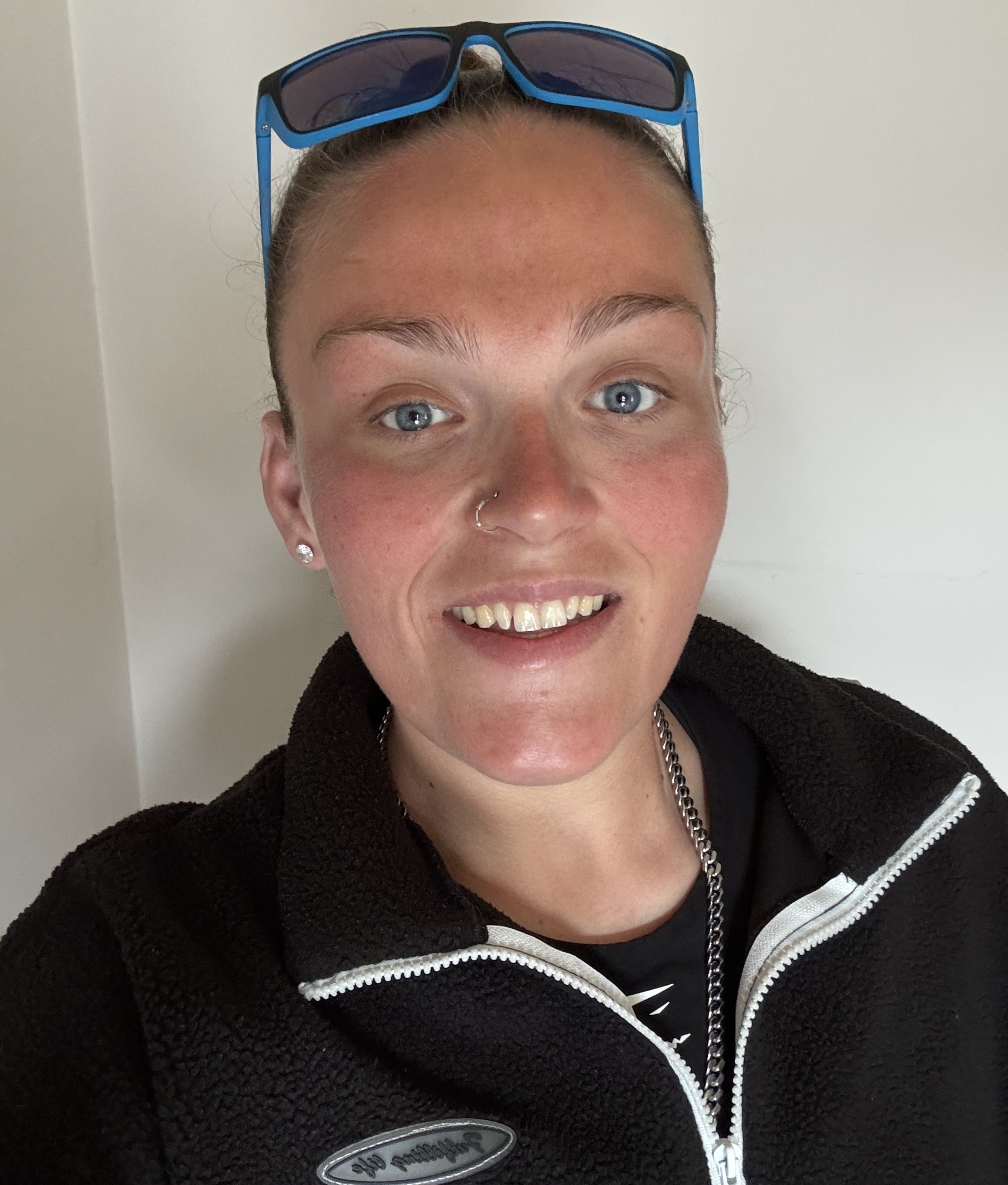
We spoke to Katie (pictured right), a member of staff at Coastland College, to learn more about her personal experience of living with Tourette syndrome and why increasing awareness matters.
Living and working with Tourette syndrome
Katie, who works as a Special Educational Needs (SEN) Administrator, was formally diagnosed with Tourette’s in 2022, despite experiencing symptoms for many years. Having worked at the college for nearly five years, she previously held a role as a Learning Support Assistant but transitioned to an administrative position as her tics became more severe.
Speaking about her experience, Katie emphasised how variable and often misunderstood the condition can be.
“Every single day looks very different for me. Some days, you wouldn’t really know I had Tourette syndrome. On other days, I can’t carry out basic tasks such as brushing my teeth without supervision… This is the reality that people don’t see.”
Challenging misconceptions
Katie highlighted the importance of Tourette’s Awareness Month in tackling widespread misconceptions. Tourette’s is often incorrectly associated solely with swearing—known as coprolalia—yet this affects only around 10–15% of people with the condition.
“Tourette’s isn’t a rare condition; the coprolalia part of Tourette’s is the rare part,” she explained. “There is too much stigma around what Tourette syndrome actually is.”
She believes that sharing real-life experiences is key to improving public understanding and reducing stigma. By hearing directly from people living with Tourette’s, communities can develop a more accurate and compassionate perspective.
Professional support and understanding
Katie also highlighted areas where health and social care services could improve, particularly around training and awareness. She described situations where professionals lacked the knowledge to respond effectively during severe tic episodes. She also pointed to the limited support available locally for both individuals and their families.
“There’s not really anyone locally who can support me, my family and my friends,” she said, noting the need to travel to Exeter for specialist care.
How to support someone with Tourette’s
When asked how others can best offer support, Katie explained that calm, understanding environments make a significant difference. On high-tic days, she benefits from low-stimulation spaces, access to prescribed medication, and the support of trusted individuals.
“The people closest to me try to ignore my tics, unless I’m going to cause harm… That’s what helps most.”
Understanding the reality
Katie also stressed the importance of dispelling harmful assumptions about Tourette’s, particularly around vocal tics.
“People think the vocal tics are what I’m thinking, and that is not true,” she said.
She explained that tic attacks can be physically exhausting and painful, sometimes lasting for hours and leaving lasting after-effects.
“They’re exhausting, they’re painful, and my whole body hurts for days afterwards… I wish people understood the reality of living with Tourette syndrome.”
With our thanks to staff and students at Coastland College.